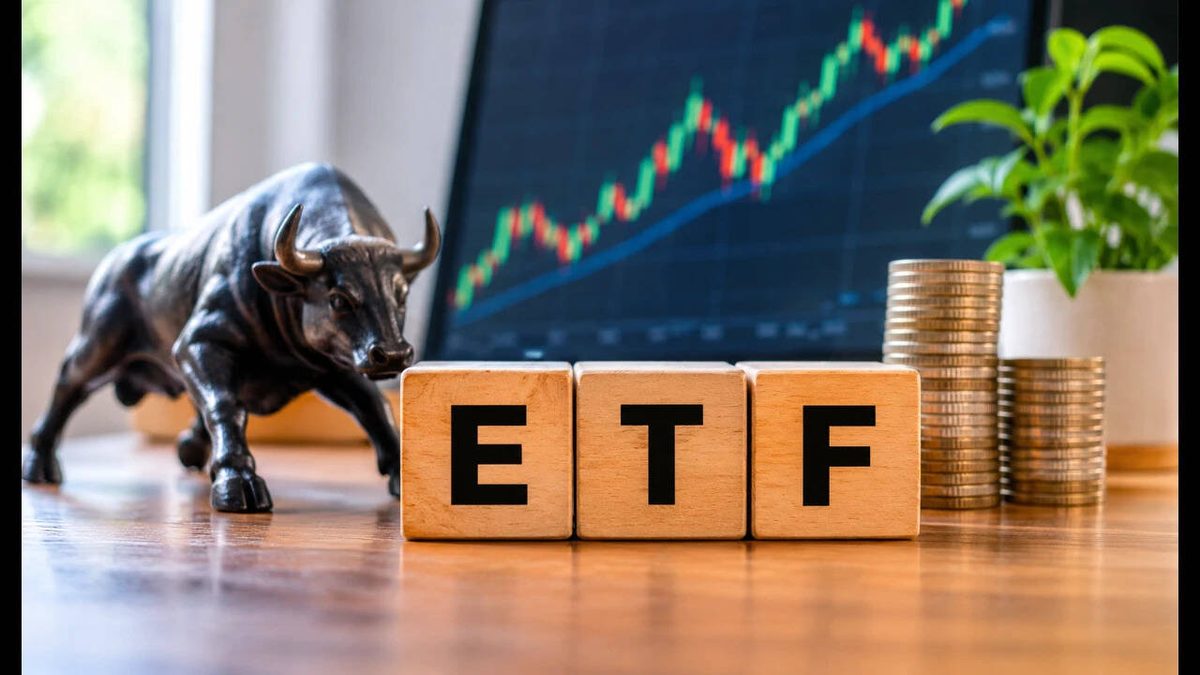
Over the 10 years to December 31, 2024, the iShares Core S&P 500 ETF (IVV) created $263.1 billion in shareholder value, more than any other ETF, according to Morningstar. The result says as much about fund size as it does about performance; Morningstar measures wealth created in dollars, not percentage returns.In its ranking of 15 funds, IVV led ETFs, followed by Invesco QQQ at $195.2 billion. The picture was different among losers. ProShares UltraPro Short QQQ (SQQQ), which bets against the Nasdaq-100, lost $10 billion. It shows how long-term results can punish short-term trading strategies held over a full decade.IVV created $263 billion in 10 years, while ProShares SQQQ lost $10 billion. What explains the gap?Second among ETFs was the Invesco QQQ Trust (QQQ), which created $195.2 billion. It has $303.3 billion in assets. The S&P 500 ETF Trust (SPY) is the world’s largest ETF, with $608 billion. It belongs to State Street’s SPDR unit, the world’s third-largest ETF issuer, which manages $1.5 trillion.Morningstar analysts Amy Arnott and Jeffrey Ptak say this gives large funds a built-in edge. They describe a “positive feedback loop of size and performance”. Strong results bring in more money, and the biggest fund companies end up with the most impact on wealth creation in dollar terms.A second Morningstar survey, published on 18 March, looked at the funds that lost the most value for shareholders. The ProShares UltraPro Short QQQ (SQQQ) lost $10 billion over the same decade. It now has $2.1 billion in assets, so the loss is nearly five times its current size.SQQQ is a short fund, built to rise when the Nasdaq-100 falls. Invesco’s QQQ tracks that same index and was one of the decade’s biggest value creators. One fund bet against what the other was riding.Two others lost $7 billion each. The ProShares Ultra VIX Short-Term Futures ETF (UVXY) has just $231.2 million in assets, about 30 times less than what it lost. The ARK Innovation ETF (ARKK) has $5.5 billion.Funds like SQQQ and UVXY use leverage or futures. They are generally built for short-term trading, not for holding over many years. That’s useful to know when you see figures this lopsided.ProShares isn’t tiny. Its $70.7 billion in assets puts it 12th in the etf.com League Tables. But SPDR’s assets are 20 times larger, and iShares, the biggest ETF brand, is 45 times larger. Morningstar’s authors say smaller issuers are still big enough for losses to hit hard in dollar terms.Arnott and Ptak point to two other causes. Some funds launched just as market conditions worsened. Others took on more risk and lost. They also found that many issuers on the loss list run lineups heavy in specialised, volatile categories.These include commodities, natural resources and emerging markets. For most of the decade, those areas didn’t add shareholder value. Morningstar named KraneShares, Barclays and Global X as three examples.

ગુજરાત
દસ વર્ષમાં સંપત્તિ સર્જનમાં એસએન્ડપી ૫૦૦ ઈટીએફ અવ્વલ, ટૂંકા ગાળાની વ્યૂહરચના નિષ્ફળ
Nov 06, 2026 | 06:06 | By JAMNAGAR MIRROR
મોર્નિંગસ્ટારના તાજેતરના અહેવાલ મુજબ ૩૧ ડિસેમ્બર ૨૦૨૪ સુધીના દસ વર્ષમાં આઈશેર્સ કોર એસએન્ડપી ૫૦૦ ઈટીએફ (IV